
In The News
15 October 2026
Utility Dive

Mainspring Energy
In some places, public pushback is eliminating any consideration of data center development entirely. Public concerns about everything from the impact of data centers on electricity rates, water resources, air quality, noise, and the visual aesthetics and character of communities have spawned extensive and often negative national and local media coverage.
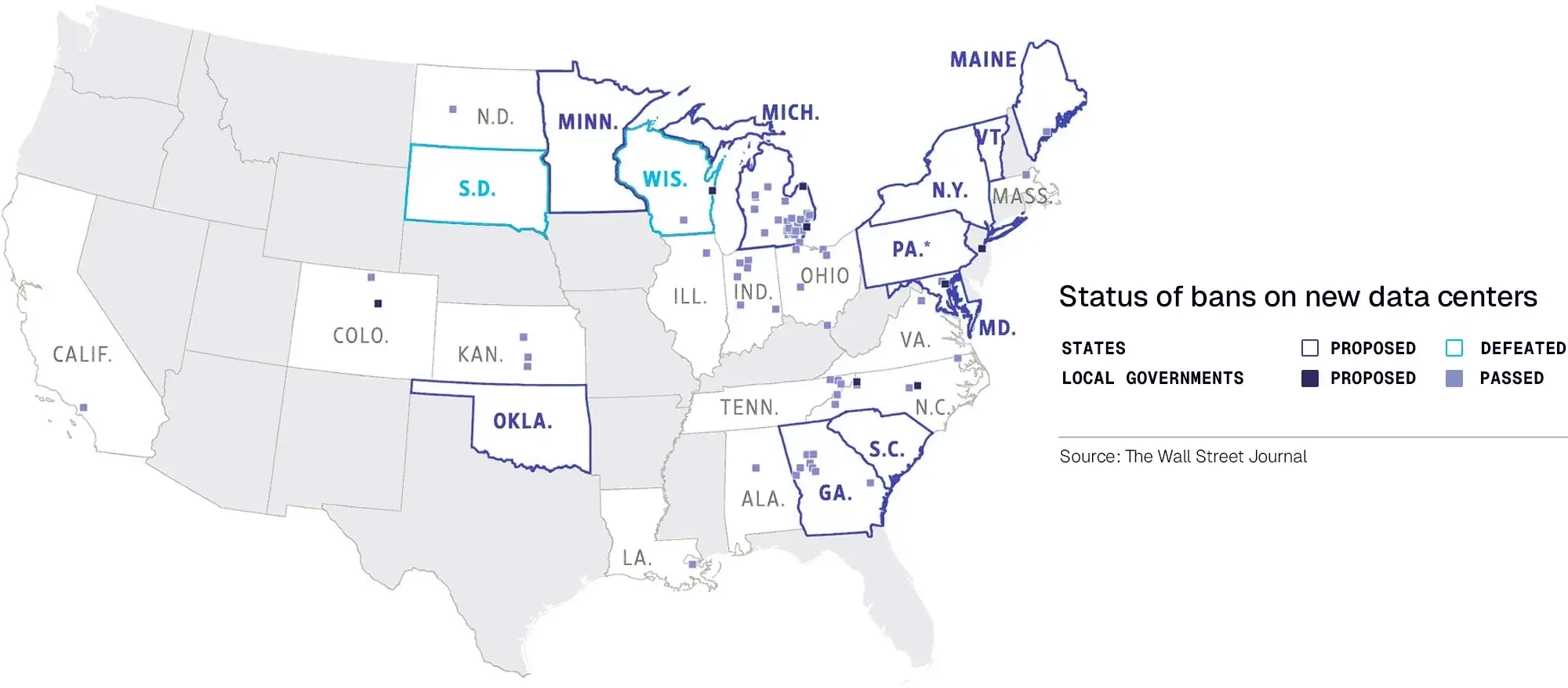
It’s not just a matter of bad publicity. For example, in Huron County, Michigan a proposed moratorium would pause data center development for three years. Lawmakers in at least 12 states, including Georgia and New York, have introduced legislation to slow or stop data centers statewide. Even in the absence of legislation, one analysis found that 40% of data center projects that attract sustained opposition end up cancelled.
As you know, the full data center story is rarely being told. Analysis by the Lawrence Berkeley National Laboratory (LBNL) and the Brattle Group found that data centers can push electricity bills down with the right rate design; extensive research demonstrates that data centers don’t rob communities of their water; and top-tier hyperscalers and developers are clear about their commitment to engage transparently, cooperatively, and beneficially with communities.
For projects under pressure to be operational in 2027 or sooner... the only way to move fast is to earn community support from the beginning.
The real issue isn't data centers themselves. It's the power technology choices you make, and the partners you choose to make them with, that determine what communities experience. For projects under pressure to be operational in 2027 or sooner, that distinction matters. The only way to move fast is to earn community support from the beginning.
Because it takes between 3 and 7 years for large loads like data centers to access grid power, onsite power solutions are a speed to power necessity. But not all onsite power solutions and providers create the same community impact. Before committing to a technology, consider five factors that will determine whether your power choice accelerates your project or stalls it.
Large gas turbines and engines are loud. For people living near data center sites, that noise is not an occasional nuisance. It is a constant, around-the-clock presence that affects sleep, health, and quality of life. Technology that operates quietly removes one of the most visceral and understandable sources of community opposition.
Onsite power technology that produces near-zero NOx and other emissions without after-treatment systems sidesteps a significant source of project delay and community opposition. Turbines and engines require large chemical processing equipment and large volumes of ammonia to meet air quality standards. That equipment is expensive, operationally complex, and, when it fails, a source of serious regulatory and health risk. Technology that meets or exceeds the most stringent air quality standards without after-treatment can be permitted consistently across multiple jurisdictions and sends a strong message that community health is a priority, not an afterthought.
Some rural communities are pushing back against data centers because of worries they will change the visual character of their home. Power generation with exhaust stacks and industrial-scale equipment is an unwelcome visual intrusion in communities unaccustomed to it. That reaction can be avoided when power technology is housed in inconspicuous boxes rather than looking like a power plant.
Many onsite power technologies, including fuel cells and gas turbines, require significant amounts of water for cooling and operations. This puts pressure on a resource many communities are already concerned about, especially in drought prone areas. Technology that generates power with no water directly addresses a legitimate community worry and reinforces a project’s commitment to being a good neighbor.
Not all power vendors are project partners. The difference matters when it comes to fulfilling your genuine commitment to earning a community’s support. A technology partner fully engaged through permitting, community meetings, and regulatory approvals answers policymaker and citizen questions and helps build a foundation of trust that keeps projects moving forward. A vendor closing a deal does not.
A recent report by the Brookings Institution suggests that a lack of transparency and community engagement is fueling citizen opposition to data centers, which is emerging as a leading constraint on their siting and approval.
In a market where community opposition can stall or stop a project, choosing the right onsite power technology and partner isn’t just about being a good neighbor. It’s a competitive advantage.
15 October 2026
Utility Dive

13 October 2026
Bloomberg
13 October 2026
Mainspring Energy